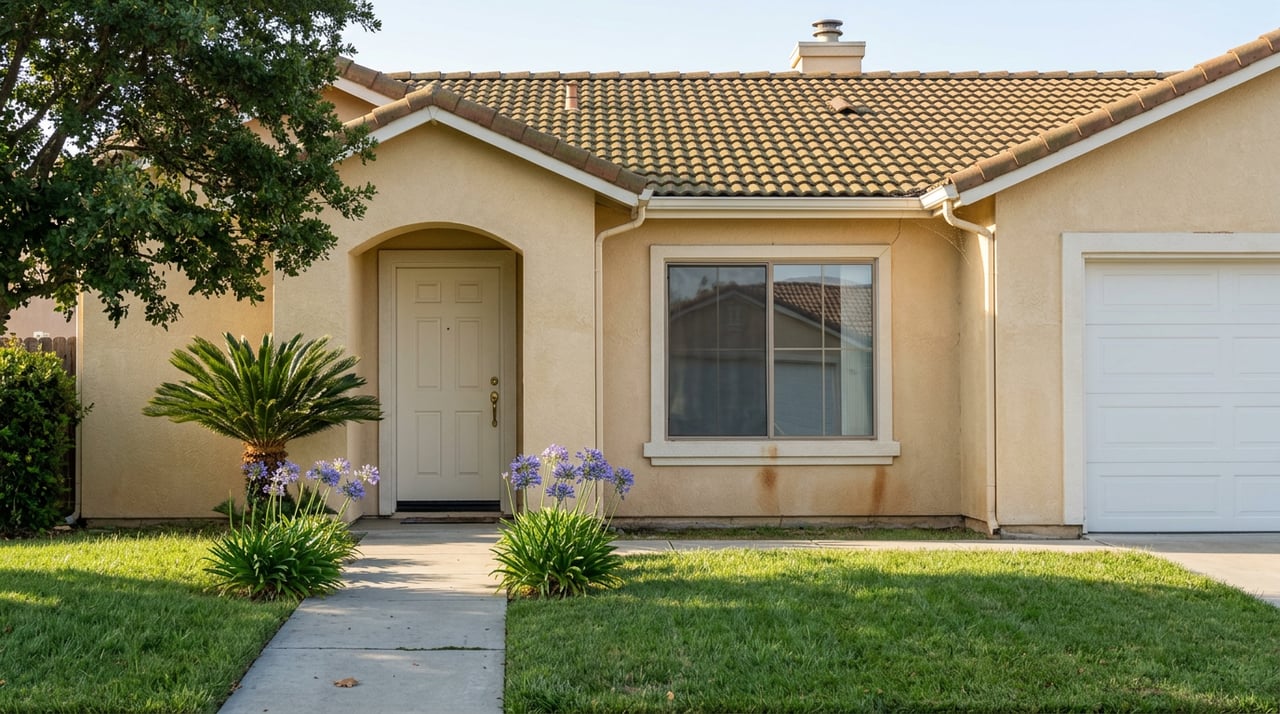
An inspector kneels under a kitchen sink in a Stanford Ranch listing, flashlight in one hand, phone camera in the other. He's not looking at the cabinets or the disposal. He's looking at the supply line, checking whether it flexes like plastic or holds rigid like copper. If it flexes, the negotiation that follows has nothing to do with the granite countertops upstairs or the freshly edged lawn out front. It has to do with a decision a plumbing manufacturer made, and then reversed, three decades ago.
Most sellers in this neighborhood price against square footage, lot size, and how recently the kitchen was touched. Those are the variables everyone can see in the listing photos. The variable that actually splits value within Stanford Ranch runs quieter than that, and it has nothing to do with anything a buyer can see on a walkthrough.
The Pipe Nobody Priced In
Polybutylene was a plastic manufactured between 1978 and mid-1996 for use as piping in home plumbing systems. Production stopped in mid-1996 after widespread allegations that the pipes were rupturing and causing property damage. That production window is not a footnote. It's the line that cuts straight through Stanford Ranch's build history.
Here's where most online advice gets California wrong. Nearly every national plumbing guide tells homeowners to look for gray flexible pipe near their shutoff valves as the tell. But polybutylene's color varies by region, and inspectors working in California often report never encountering the gray version that's common elsewhere. The pipe here is just as likely to show up white, black, or blue. A seller who searches "how to spot polybutylene" and applies the gray-pipe rule to a Stanford Ranch crawlspace can walk away confident and wrong.
Why This Specific Neighborhood
Stanford Ranch emerged as a prominent Sacramento-area suburb in the mid-to-late 1990s, when most of its houses were built. That places a meaningful share of the neighborhood's original construction directly inside, or right at the tail end of, polybutylene's production run. Many Rocklin homes built in the early-to-mid 1990s, particularly in Stanford Ranch, were plumbed with polybutylene pipe that's known to deteriorate and fail over time.
Compare that to Rocklin's other master-planned communities a few miles away. Whitney Ranch and Whitney Oaks are Rocklin's newer master-planned communities, with homes built primarily from 2000 to 2015, well past the manufacturing cutoff. Those neighborhoods carry a different, visible premium instead: Whitney Ranch sits within the Whitney High School attendance area, which commands a school-driven premium of $25,000 to $50,000 over comparable homes in other Rocklin neighborhoods. Buyers can see that premium coming. It's baked into every comp sheet and every conversation about attendance boundaries before an offer is even written.
Whether a Stanford Ranch home has polybutylene plumbing may not be apparent until the pipes are inspected.
What Actually Shows Up in Escrow
Search "cost to replace polybutylene pipe" and most calculators quote small numbers. National estimates put the cost to replace polybutylene pipes between $300 and $5,100, with the average homeowner spending around $1,200. Those figures describe spot repairs, a single failed fitting or a short run behind one wall. They are not what shows up on a Stanford Ranch repair request.
A full replacement for a typical Rocklin home built in this era runs $8,000 to $15,000, because the ask at that point isn't patching one leak, it's re-piping the whole house before an insurer or a buyer's lender will sign off. The gap between the generic number and the local one is exactly the kind of detail that separates a seller who's done research from a seller who's done a Google search.
Here's what that looks like on two otherwise identical Stanford Ranch listings:
| Home built 1993 | Home built 1999 | |
|---|---|---|
| Plumbing material | Likely polybutylene | Likely copper or CPVC |
| Inspection outcome | Repipe request or price credit | Clean plumbing section, no leverage |
| Typical added cost at closing | $8,000 to $15,000 | $0 |
| Buyer financing friction | Possible if lender requires disclosure resolution | Minimal |
Same square footage. Same street. Same list price on day one. Very different conversation once the inspection report lands.
Other Potential Replacement Costs
Polybutylene rarely travels alone. The families who bought the earliest Stanford Ranch homes in the late 1980s and early 1990s are now in their seventies and eighties, and as they move on, their adult children are inheriting houses that have gone thirty-plus years with the same original systems. A home built in that narrow construction window usually shipped with more than one original component that's now aging out at the same time.
The common cluster in Stanford Ranch includes original tile roofs nearing end-of-life at $18,000 to $30,000 to replace, polybutylene plumbing in pre-1996 homes at $8,000 to $15,000 to repipe, and original HVAC systems still running on R-22 refrigerant that's since been phased out, at $8,000 to $14,000 to replace. Stack those together and the cost of bringing one of these homes up to a competitive standard can easily clear $50,000. The plumbing is usually the first thing a home inspector flags in writing. Other replacement costs may also need to be considered.
Three Ways Sellers Are Handling It This Season
- Replace before listing. Removes the issue from the negotiation entirely and lets the home compete on its other merits.
- Price to reflect it and disclose upfront. Repipe says there's no law preventing the sale of a home that has it. The presence still has to be disclosed to buyers, so sellers can consider the known cost when setting a price.
- Sell as-is and let the buyer's team handle it. Sellers can replace proactively, price to account for the cost, or sell as-is to a buyer who handles replacement after closing. This works best when the rest of the home is priced to absorb that flexibility.
An inspector can identify that a pipe is polybutylene on sight. What they can't tell you is how close it is to failing. The material breaks down from the inside, and actually confirming its condition would mean shutting off the water and cutting into a wall, which is well beyond what a standard visual inspection covers.
That gap between "identified" and "assessed" is exactly why the three options above exist. Nobody, including the inspector, can hand a seller a clean bill of health on polybutylene. The best anyone can do is address the uncertainty before negotiations begin.
What to Check Before You List
- Confirm your build year and permit history. A home permitted in 1993 carries very different plumbing odds than one permitted in 1998, even on the same street.
- Have a licensed plumber physically identify the pipe material. Given that polybutylene can show up in gray, white, silver, black, or blue, a color guess isn't a substitute for someone actually tracing the line.
- Get a repipe quote in hand even if you don't plan to do the work. Knowing your number before a buyer's inspector finds theirs changes who controls the conversation.
- Check your roof and HVAC system in the same pass. In Stanford Ranch, these three systems tend to share a birth year, so a problem with one is a reason to look at the other two.
- Ask what else is on the market in your price band right now. Stanford Ranch has 15 to 25 active comparable listings at any given time during peak season, so a home that's resolved its plumbing question ahead of time stands out from the pack before a single offer comes in.
FAQ
Does every Stanford Ranch home from the 1990s have polybutylene plumbing? No. It's specific to homes permitted while the material was still in production, roughly the early-to-mid 1990s window. Homes built toward the later part of the decade are more likely to have copper or CPVC. The only way to know for certain on a specific address is to have a plumber trace the lines.
If I've never had a leak, do I still have to disclose it? Presence of the material itself, not just past failures, is the kind of known condition California sellers are expected to disclose. Waiting for a leak to force the issue tends to produce a worse outcome than addressing it on your own terms.
Is this only a Stanford Ranch problem in Rocklin? It's tied to construction era more than any single neighborhood boundary. Stanford Ranch has the largest concentration of homes built in that window, which is why the issue shows up there most often, but any Rocklin property from the same years carries the same odds.
Does replacing the plumbing before listing actually pay for itself? It depends on how much negotiating room a buyer would otherwise take. A resolved plumbing question means one less item competing for a price reduction, and in a market with as many comparable Stanford Ranch listings as this one has, removing points of friction tends to matter as much as the dollar figure itself.
If you're sitting on an original-owner Stanford Ranch home and trying to figure out which of these paths makes sense for your specific plumbing, roof, and HVAC combination, that's exactly the kind of pre-listing math The Alfano Group at Compass walks through with sellers before a single sign goes in the yard. Reach out and we'll help you consider your plumbing, roof, and HVAC as part of your pre-listing plans.
This article is general information, not legal, tax or financial advice. Consult a qualified professional about your situation.
